Luang Prabang · Founded 1560 · UNESCO World Heritage
Wat Xieng Thong The Golden City Temple
ວັດຊຽງທອງ · Jewel of Lan Xang
Luang Prabang has countless beautiful temples — but Wat Xieng Thong is the one that makes you stop walking and just stand there, looking.
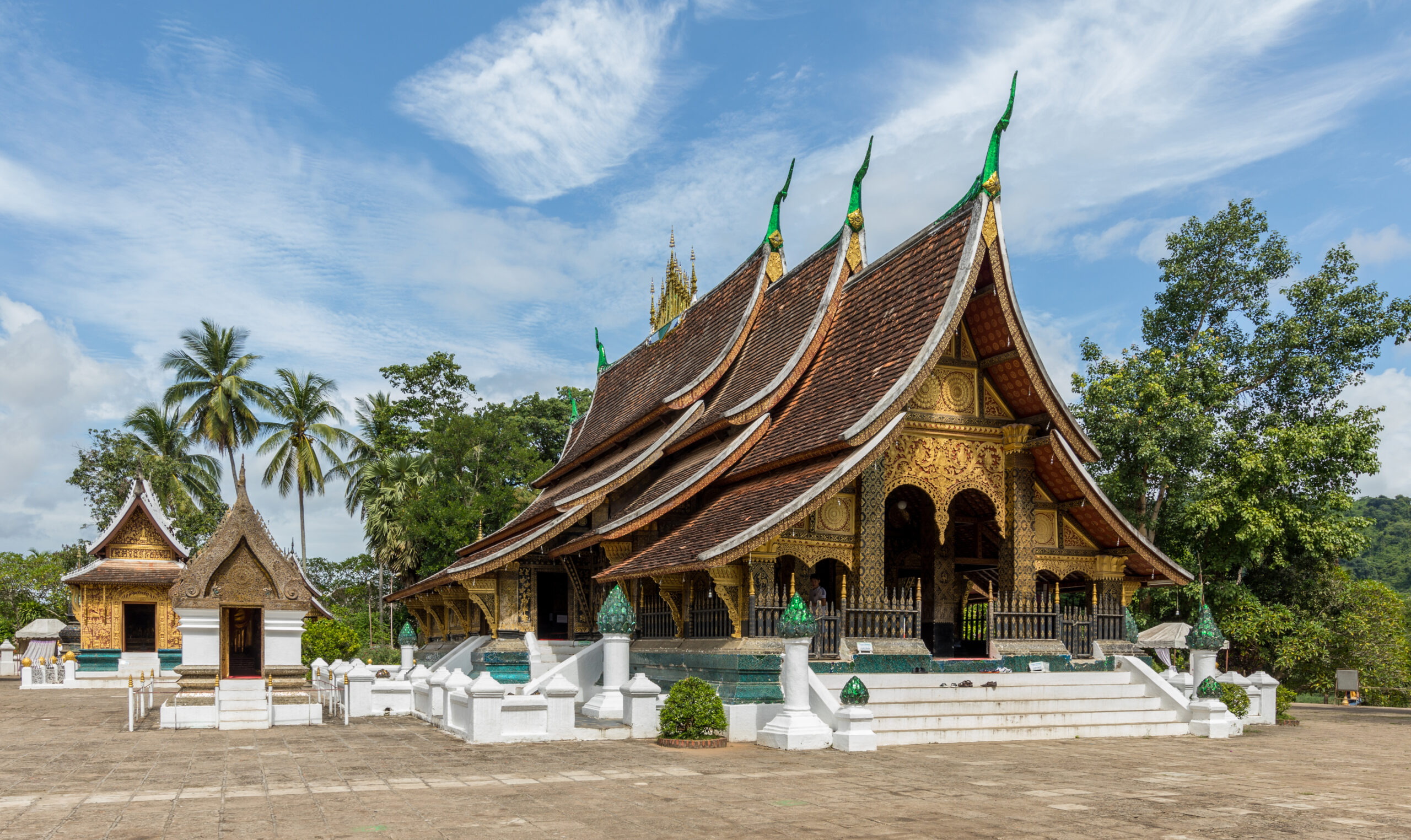 The Ordination Hall
 Tree of Life Mosaic
 Tree of Life Mosaic
 Tree of Life Mosaic
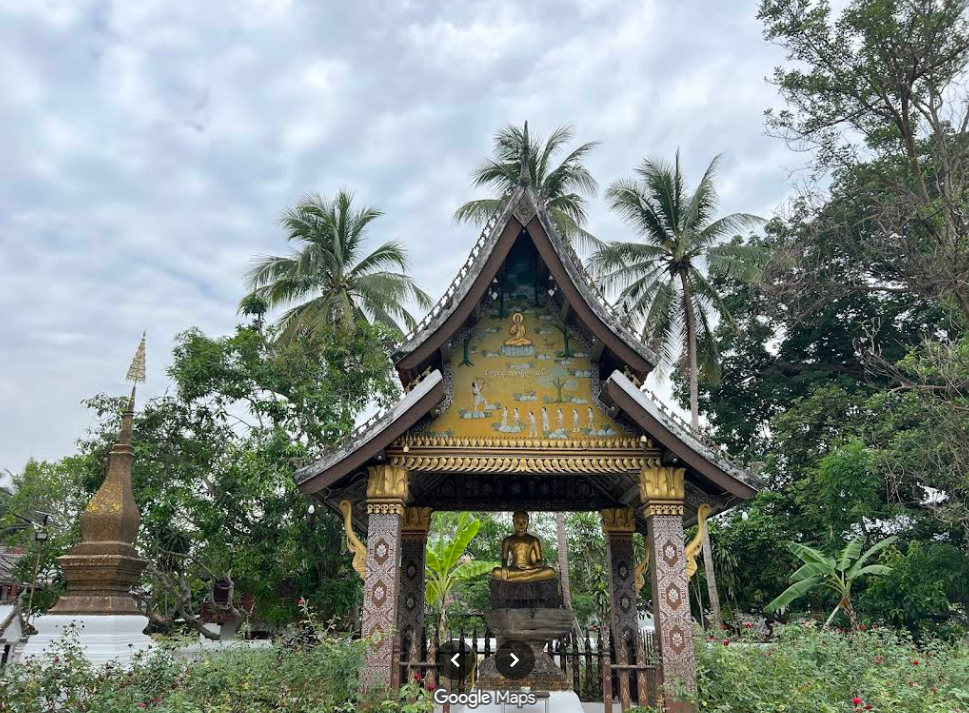 Tree of Life Mosaic
The Heart of Luang Prabang
Not just a temple —
an open-air museum that breathes
If Luang Prabang is a city of civilisation, then Wat Xieng Thong is its beating heart — cradled between the Mekong and the Nam Khan rivers at the very tip of the peninsula. This is not just the most important temple in Laos; it is a work of art that survived wars and centuries of change, earning its place as the undisputed "Jewel of Lan Xang architecture" — and the one place every visitor to northern Laos names as their most unforgettable stop.
"Every monk's robe, every scent of incense, every gentle bell in the breeze — Xieng Thong slows time down in a way that very few places on earth can do."
— On Wat Xieng Thong, Luang PrabangPart I · The Story
460 Years of Living History
Two chapters define this temple above all others — and both are worth knowing before you arrive.
1560 CE · King Setthathirath
Built by the Greatest King of Lan Xang
Wat Xieng Thong was built in 1560 CE by King Setthathirath the Great — the very same king who later built Pha That Luang in Vientiane. He commissioned this temple before moving the capital south, as a final, magnificent gift to Luang Prabang. The name Xieng Thong means "City of Gold" — a name that reflected the kingdom's wealth, its cultural richness, and its pride at the height of Lan Xang's golden age.
1560Royal Status · The Temple of Kings
Where Lao Kings Were Crowned
For centuries, Wat Xieng Thong was the royal temple of the Lan Xang dynasty — the place where Lao kings were officially crowned and where royal funeral rites were conducted. This status meant it received the finest craftsmen, the most precious materials, and the most painstaking care of any temple in the kingdom. That care — and a great deal of luck — kept it standing through wars that destroyed almost everything else around it. Walking in, you are walking into a space that has witnessed the full sweep of Lao royal history.
◈Part II · What to Look At
Three Things That Will Stop You in Your Tracks
The beauty of Xieng Thong is in the details. Take your time. Every surface has something to say.
Highlight 01
The Tree of Life Mosaic
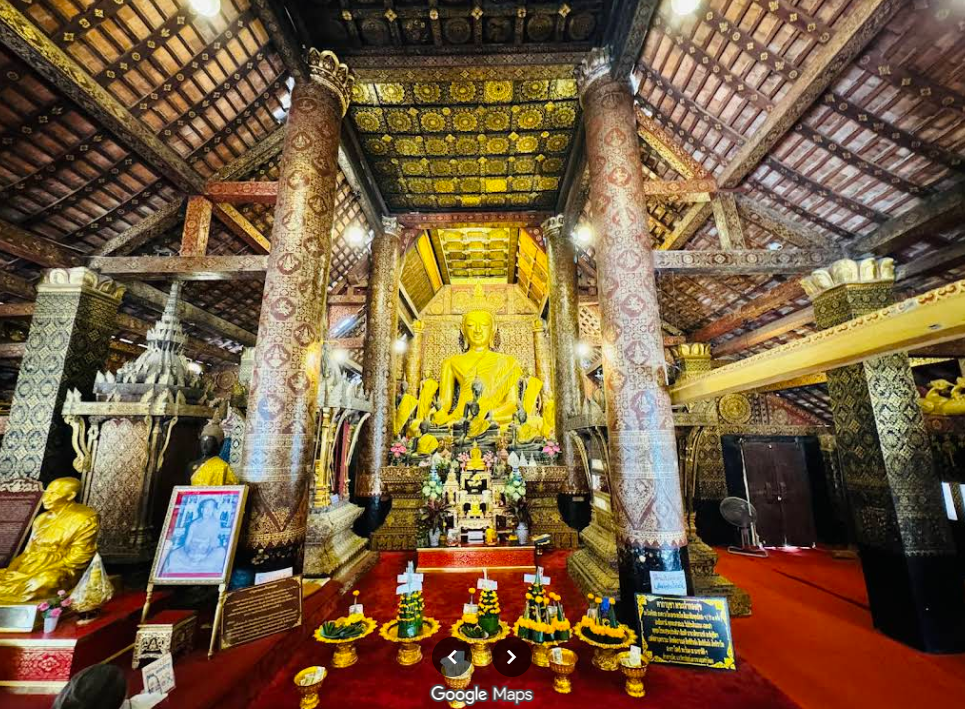
On the rear wall of the ordination hall, you will find the most celebrated artwork in Laos — a large glass mosaic Tree of Life set against a deep red background. Each leaf, each branch, each creature in the composition is made from tiny hand-cut pieces of coloured mirror glass, arranged over centuries-old plaster. When sunlight catches the surface, the tree seems to shimmer and breathe. It depicts the founding legend of the temple, the animals of Lao mythology, and the sacred cosmic tree that connects heaven and earth. You can stand in front of it for a very long time and keep finding new things.
Highlight 02
The Sim — Lan Xang Roofline
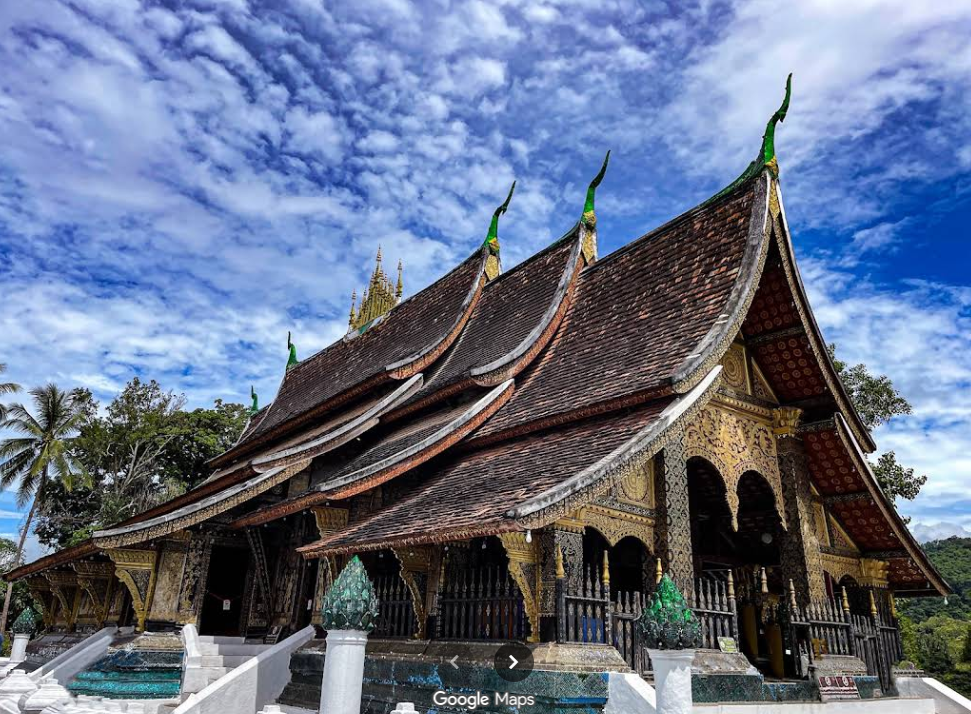
The main ordination hall is the definitive model of Luang Prabang temple architecture. Its triple-tiered roof sweeps down in a long, low, graceful curve — almost touching the ground — expressing absolute humility before the Buddha. The interior and exterior are covered in gold-leaf lacquerwork telling stories from the Jataka tales. It is the most photographed building in Luang Prabang, and it earns that status every single day.
Highlight 03
The Funeral Chariot Hall
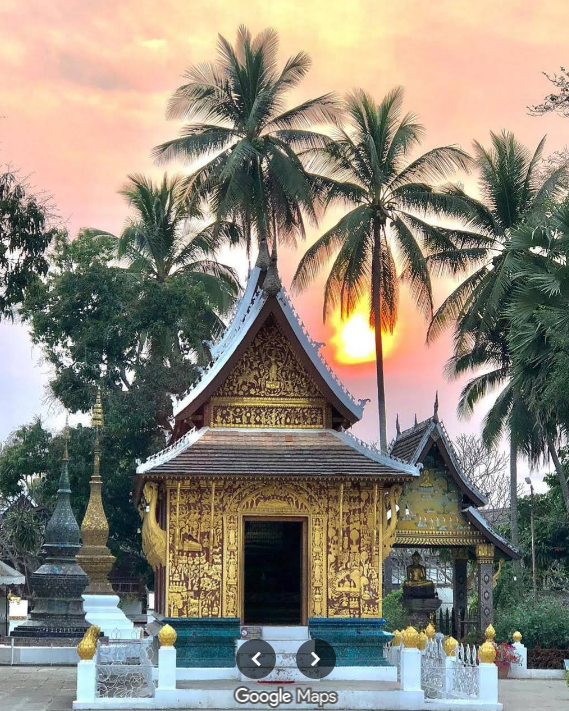
A separate golden building near the entrance houses the Royal Funeral Chariot of King Sisavang Vong — an extraordinary wooden carriage covered in gold leaf, supported by seven-headed nagas. It is a profound piece of royal craftsmanship and one of the finest examples of Lao decorative art anywhere in the world. Do not walk past it.
Part III · When to Come
Timing Your Visit Just Right
Xieng Thong is beautiful at any time of year — but these windows make it truly unforgettable.
November – February
High Season Sweet Spot
This is the prime window. Cool, dry air, clear blue skies, and temperatures that can dip to 15°C in the morning. The golden rooftops glow against deep blue — exactly the photograph you have been imagining. Comfortable for walking, easy for photography, and the temple is at its most vibrant.
April
Lao New Year (Pi Mai)
Yes, it is hot. But if you come in April, you get to witness the traditional water-blessing ceremony for the temple's most sacred Buddha images — a moment of genuine local devotion that no tourist itinerary can manufacture. The energy during Pi Mai is unlike any other time of year.
October
Boat Racing & Lantern Festival
During the full moon of October, Wat Xieng Thong is decorated with thousands of terracotta lanterns and hanging oil lamps. At night, the temple glows from within like something from another world. It is the most romantic and atmospheric the temple ever gets — and one of the most magical nights in all of Laos.
Best Morning Window: 08:00 – 09:30
Soft early light, monks going about their morning duties, relatively few tourists. The shadows are long and the gold catches the low sun beautifully. Bring a camera and arrive with no rush.
Best Evening Window: 16:00 – 17:00
The golden afternoon light pours directly onto the facade — the roof tiles turn the colour of pure fire. The name "Xieng Thong" — City of Gold — makes complete sense in this hour. Come back for this even if you visited in the morning.
Part IV · Practical Info
Everything Before You Go
- Days
- Open Daily
- Hours
- 08:00 – 18:00
- Morning sweet spot
- 08:00 – 09:30
- Evening golden hour
- 16:00 – 17:00
A small fee that goes toward preserving one of the finest temples in Southeast Asia. More than worth it.
- City
- Luang Prabang
- Position
- Tip of the peninsula
- Rivers nearby
- Mekong + Nam Khan
- Best approach
- Walk from town centre
Dress Code — They Take This Seriously
Wat Xieng Thong enforces its dress code strictly and with good reason. No shorts, no sleeveless tops, no bare shoulders. Women should wear a traditional sinh (available to rent at the gate) or long trousers. Men need long trousers. Come prepared — you will not be admitted otherwise, and you will not want to miss what is inside.
Come once. Remember forever.
Wat Xieng Thong is not a monument you visit and check off a list. It is a place that gets under your skin — the way the carved wood smells in the morning heat, the way the mosaic tree shimmers, the way a monk's robe sweeps across a courtyard that has looked exactly like this for four and a half centuries.
If you want to see what the hands of Lao craftsmen, generation after generation, were capable of — this is where you come.