National Symbol · Vientiane, Lao PDR
Pha That LuangThe Great Stupa
Laos' holiest monument and national symbol — a golden tower of faith rising 45 metres above the capital, gleaming since 1566.
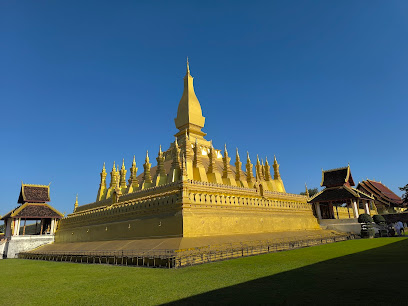 Pha That Luang · Vientiane
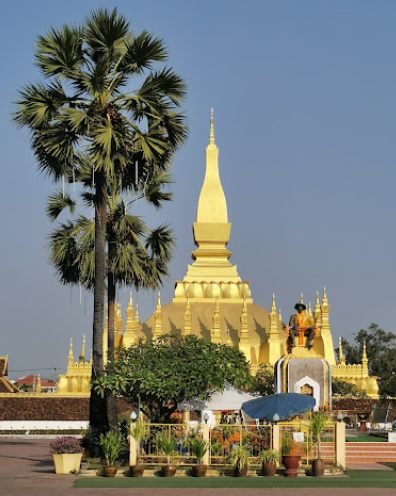 The Golden Stupa · 45 Metres High
The Great Stupa
Where Heaven Meets the Capital
If you travel to Vientiane, the first thing the sun touches each morning — sending golden sparks shimmering across the skyline — is Pha That Luang, also known as Phra Chedi Lokachullamani. This is the most important Buddhist monument in the Lao PDR, simultaneously the national symbol that appears on the country's coat of arms and banknotes, and the sacred destination that pilgrims and travellers from every corner of the world dream of visiting at least once in their lifetime.
"Standing before it, you are not simply visiting a temple. You are standing at the very centre of a nation's soul."
— On Pha That Luang, VientianePart I · Over Two Thousand Years
A History Written in Gold & Fire
To truly understand the greatness of Pha That Luang, we must follow the thread of faith buried beneath this ground — a thread that has survived countless crises across two millennia.
~ 236 BCE · From India to Lan Xang
The First Foundation — A Royal Mission from Ashoka
According to the Urankhathat chronicles, Pha That Luang was first constructed around 236 BCE by a delegation of Buddhist missionaries sent by the Emperor Ashoka the Great during his campaign to spread the Dharma across Suvarnabhumi. They carried with them a sacred Buddha breast-bone relic, which was enshrined within a large stone chamber. At that time, the surrounding territory was under the influence of the ancient Khmer Empire.
1566 CE · The Great King
King Setthathirath & the Lan Xang Masterpiece
The defining chapter in the stupa's history — the chapter that captivates visitors most — belongs to King Setthathirath the Great, the mightiest monarch of the Lan Xang Kingdom. When he moved the capital from Luang Prabang to Vientiane in 1566, he ordered the construction of a grand new stupa to enclose the original shrine. The result was a multi-tiered lotus-bud stupa in the most exquisite Lan Xang style ever created — soaring skyward as both a sanctuary and a declaration of nationhood.
18th–19th Century · Destruction & Rebirth
From Ruin to Resurrection
Pha That Luang has not always stood resplendent. During the wars with Siam and the Haw invasions of the 18th and 19th centuries, the monument was severely damaged and left nearly in ruins, swallowed by jungle. The first French restoration attempt came between 1900 and 1930, though it remained incomplete. A second, more thorough restoration was undertaken in 1930, guided by the old drawings of a Dutch explorer — and from those aged sketches, the stupa was reborn into the form you can see today.
Part II · Sacred Architecture
A Monument in Three Tiers
Visitors are invariably struck by the stupa's height of over 45 metres. But more fascinating still are the layers of symbolic meaning encoded into every surface — each tier a step on the path to enlightenment.
First Tier · Base Level
The World of Humanity
The broad first terrace — 68 metres per side — is ringed with smaller stupas and four shrine halls at the cardinal points. It represents Kama Bhumi, the realm of human existence, with all its earthly desires and attachments.
01Second Tier · Middle Level
The Thirty Perfections
The second terrace is encircled by 30 smaller stupas, each one representing one of the Thirty Parami — the perfections of virtue that the Buddha cultivated across countless lifetimes before attaining supreme enlightenment.
02Third Tier · The Spire
Nirvana — The Final Release
The lotus-bud spire, sheathed in pure gold leaf, points directly to the heavens. It is the symbol of Nibbana — absolute liberation from the cycle of rebirth. To gaze upon it is, for many Lao people, an act of devotion in itself.
03The Secret of the Gold
Many visitors wonder — is Pha That Luang made of real gold? The answer is nuanced. The body of the stupa is rendered in high-quality gilded plaster and paint, but the uppermost spire and several decorative plates are covered in genuine gold leaf, applied so that sunlight strikes them at precisely the right angle to produce the sacred, awe-inspiring glow that has made this monument famous across Southeast Asia for centuries.
Part III · Plan Your Visit
Everything You Need to Know
Updated visiting hours, fees, and practical details for 2026.
- Mon – Sun
- Open Daily
- Morning
- 08:00 – 12:00
- Afternoon
- 13:00 – 16:00
- Lunch break
- 12:00 – 13:00 (closed)
Foreign visitors — inner stupa complex.
Fees may vary slightly with economic conditions.
Outer grounds & King Setthathirath monument: Free of charge.
- Address
- That Luang Rd, Vientiane
- From Patuxai
- ~10 min by tuk-tuk
- Best photo time
- Sunrise / Golden Hour
Visitor Guidelines
Dress Code & Sacred Rules
Pha That Luang is Laos' holiest site. Visitors are asked to observe the following requirements strictly and with respect.
Dress Modestly
Women must wear a sinh (traditional Lao skirt) or long trousers covering the knees. Sarongs are available to borrow or rent at the entrance. No sleeveless tops for any visitor.
Photography
General photography is permitted throughout the grounds. Please remain respectful and composed. Drone photography is strictly prohibited without advance official permission.
Lunch Break Closure
The inner sanctuary closes from 12:00 to 13:00 daily. You are still welcome to walk and photograph around the outer perimeter walls during this hour.
Circumambulation
Join local worshippers in walking clockwise (Thaksinawaht) around the stupa. This ancient ritual of devotion is open to all visitors regardless of faith, and carries a quietly transformative energy.
Part IV · A Reason to Return
The That Luang Festival
If you wish to experience the full power of devotion here, time your visit for the Boun That Luang Festival — held every November at the full moon of the twelfth lunar month. During this week, Pha That Luang blazes with light and faith in a way that no photograph can fully capture.
Prasart Pheung Procession
The most spectacular ceremonial parade in all of Laos — a dazzling procession of wax castle offerings, carried through firelit streets by thousands of participants in traditional dress.
The Great Alms Giving
Tens of thousands of Lao people in traditional clothing line up around the entire stupa to offer alms to monks arriving from monasteries across the entire country — a sight of breathtaking communal devotion.
Seven Nights of Celebration
The surrounding grounds transform into a vibrant ancient market running for seven days and seven nights — traditional food, local crafts, folk performances, and the warm spirit of a nation gathered together.
Why Visit
History That Is Still Alive
Visiting Pha That Luang is not simply walking through an ancient site. It is standing before a living history — a golden monument that has survived invasions, jungle, and centuries of time, yet continues to anchor an entire nation's identity. In the wide golden courtyard, the sense of peace is real. Walking clockwise around the stupa alongside local worshippers, you will feel something shift — a quiet energy that those who come here describe as impossible to name but impossible to forget.
Whether you come to study art history, to pray, or simply to witness beauty at its most profound — Pha That Luang will make your journey to Laos complete.